
STORIES OF IMPACT
Real lives. Lasting change.
I MAKE MISTAKES SO YOU CAN MAKE THEM TOO
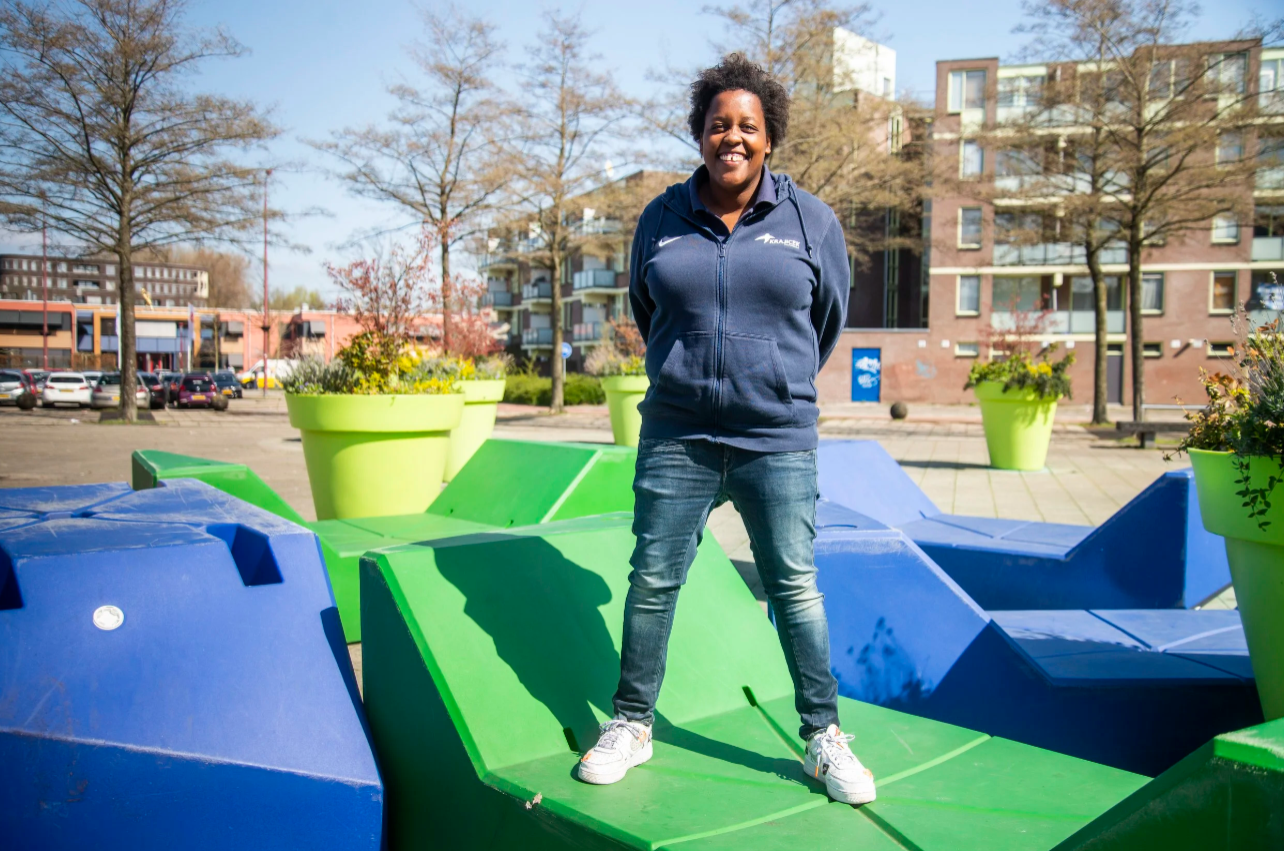
Angelique Rozeboom (32) spent years working in disadvantaged neighbourhoods across the country to get girls involved in sports. Now, as regional manager at the Krajicek Foundation, she hopes to ensure that Krajicek Playgrounds are no longer the exclusive domain of boys. 'On too many pitches, it's still the law of the jungle. This deprives girls of the opportunity to enjoy playing sport.'
-
Until she was 18, Angelique could be found almost every day on a small field in the Deppenbroek neighbourhood of Enschede. A talented footballer, she played in the KNVB youth teams and competed at the highest national amateur level with FC Berghuizen in Oldenzaal.
She once dreamed of becoming a professional player. But at the time, opportunities for girls were even more limited than they are today. At 26, she transitioned into becoming a community sports coach through the CIOS Neighbourhood Sport and Education programme.
From her own neighbourhood, Angelique saw something many policymakers overlooked.
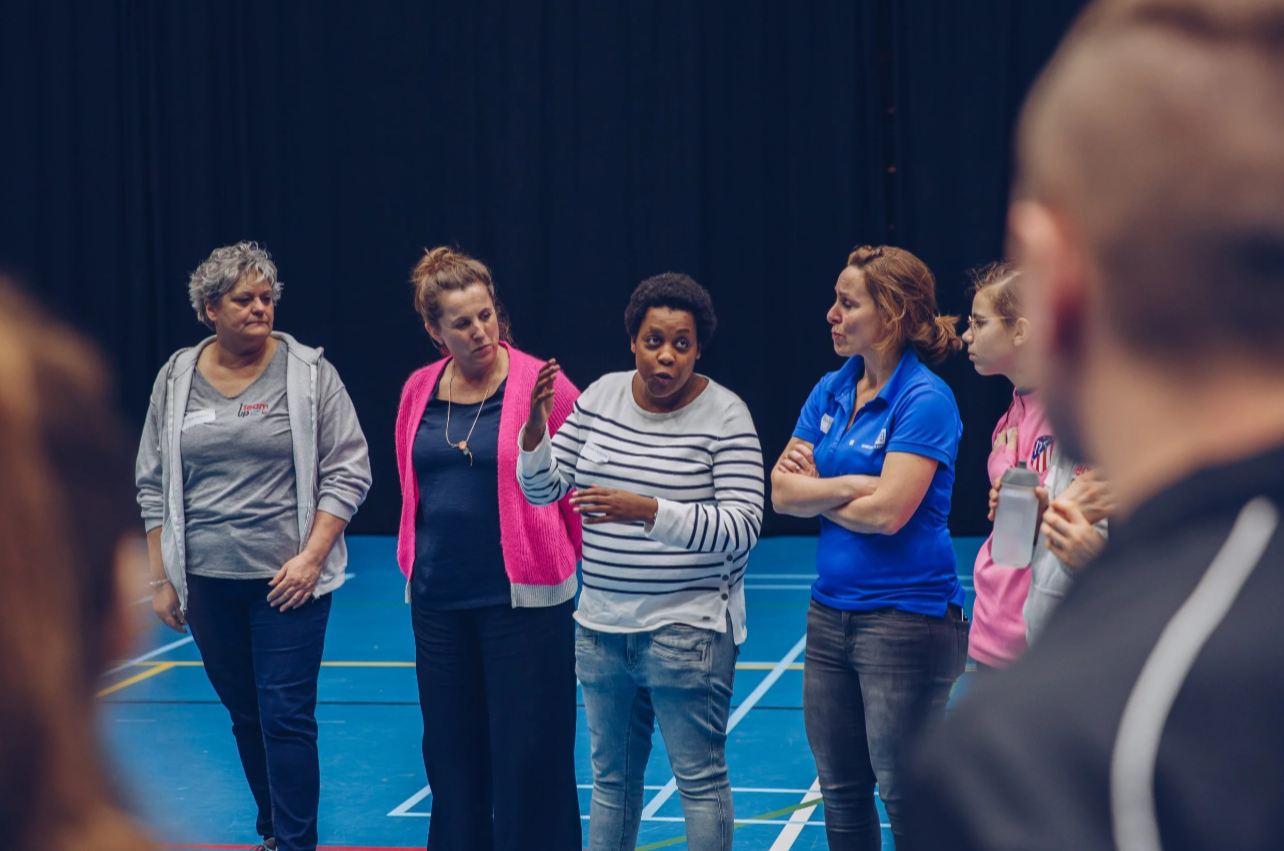
“On those playing fields, it's actually the law of the jungle,” she explains. “There are so many children, especially girls, who can’t cope with that.”
Because she was good at football, she was accepted by the boys. But many other girls were excluded.
“They weren’t good enough to join in. Then it’s no longer fun to go outside.”
In disadvantaged neighbourhoods such as Deppenbroek, Overvecht, Kanaleneiland and Hoograven, girls’ participation in sport lagged significantly behind that of boys, especially among immigrant communities.
Angelique decided to act.
She launched Meidensport, a girls-only sports initiative in a gym next to a school in Overvecht.
“I couldn’t handle the influx,” she recalls. “It was crazy how many girls showed up. The first time, there were 35 girls, and that was full. And many more wanted to come.”
The approach was simple but powerful:
Girls-only spaces
Focus on enjoyment, not competition
Time to talk before playing
“Give boys a ball and they’ll play football for an hour. Girls want to talk first, share their feelings. So we talked, and then we did sport.”
Sport became a safe space.
The model quickly expanded to Kanaleneiland and Hoograven.
In each neighbourhood, participation surged.
More importantly, girls who had previously felt excluded began to:
Engage regularly in physical activity
Build confidence
Form social bonds
Develop a sense of belonging
“I still bump into those girls sometimes,” Angelique says. “It’s great to see how they’ve grown.”
Lessons Learned
Angelique also highlights a structural challenge.
“This target group is not always understood by policymakers,” she explains.
Top-down approaches often miss the real needs of neighbourhoods.
“I once heard someone from the local council say: you have to get at least 30 children doing sport every week. I don’t find that interesting at all. I’d rather have 10 children who have never been involved in sport.”
Her work demonstrates that meaningful impact is not about volume, but about inclusion.
SPORTS IS THE MOST IMPORTANT TOOL TO ENABLE PEACE BUILDING
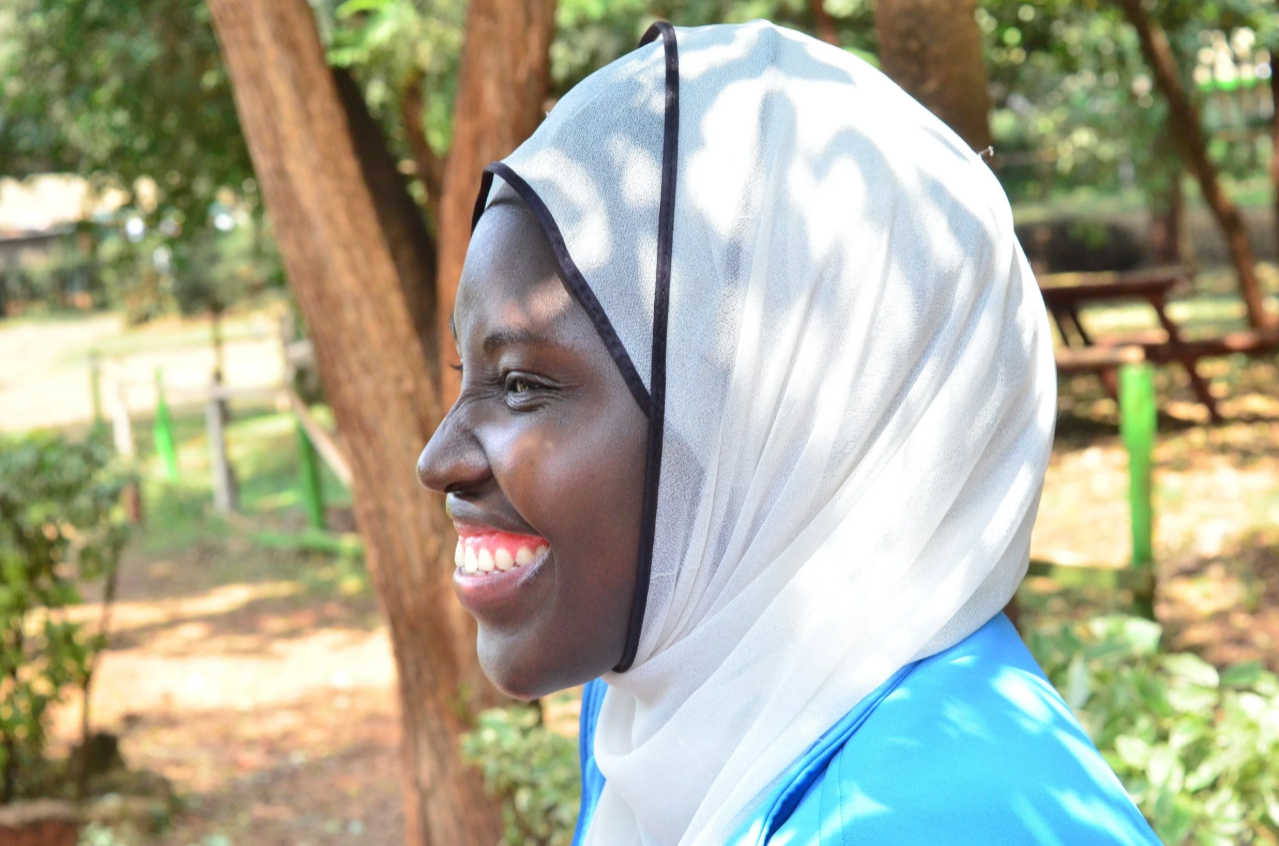
To Mariam Twahir it is clear: sport is the most important tool to enable peace building. In the second largest slum of Africa, she acts as a coach to a group of 60 youth once a week. ‘When I see that girls become involved in different activities, I feel true change is achieved in a community’.
-
On a training field on the edge of Kibera, one of Africa’s largest informal settlements, located in Nairobi, Kenya, youth gather weekly for sports activities led by Mariam Twahir.
Together with her husband Ben Ooko, Mariam co-founded Amani Kibera, a peace-building organisation established in the aftermath of Kenya’s 2007 post-election violence.
Kibera, home to an estimated 700,000 to over one million residents, experienced severe ethnic tensions during that period. Amani Kibera was created to ensure that such violence would not define the next generation.
Following the 2007 elections, thousands lost their lives in ethnic violence across Kenya. Informal settlements like Kibera were particularly affected.
Youth were often manipulated by political actors and drawn into conflict.
“In 2007, the youth was truly abused by politicians who turned people against each other.”
The challenge was not only peace-building, it was rebuilding trust across ethnic lines.
Amani Kibera uses:
Sport
Fashion
Reading
as tools for peace and empowerment.
The philosophy is simple:
If young people interact, play, and learn together, prejudices dissolve.
Through weekly sports sessions, football tournaments, and the Uwezo Girls Empowerment programme (supporting 20 fashion students), Amani Kibera creates safe spaces where youth from different ethnic backgrounds collaborate.
A recent campaign, Stones4Peace, symbolised this transformation. Stones once used in violence are now collected to build a community centre together.
Each week, Mariam coaches approximately 60 youth (35 girls and 25 boys).
“They forget where they are from. All that matters is the game.”
Beyond sport, youth develop:
Leadership skills
Emotional regulation
Conflict resolution abilities
Confidence and self-awareness
Parents who initially objected to girls participating are now supportive after seeing improvements in academic performance, discipline, and wellbeing.
Youth increasingly serve as peace ambassadors in their communities, organising environmental clean-ups, recycling initiatives, and social activities.
Mariam reflects:
“Sports is the best way to transfer life lessons to youth.”
Peace-building is not abstract.
It requires:
Consistent engagement
Safe community spaces
Role models
Reflective dialogue
Post-game evaluations are central. Youth discuss emotions, conflict, and behaviour, learning to resolve tensions through conversation rather than confrontation.
For Mariam, leadership is not defined by gender:
“The most important thing is that youth listen to you and accept you as a coach. Then it does not matter if you are male or female.”
I WANT TO MOVE EVERYONE WHO CROSSES MY PATH
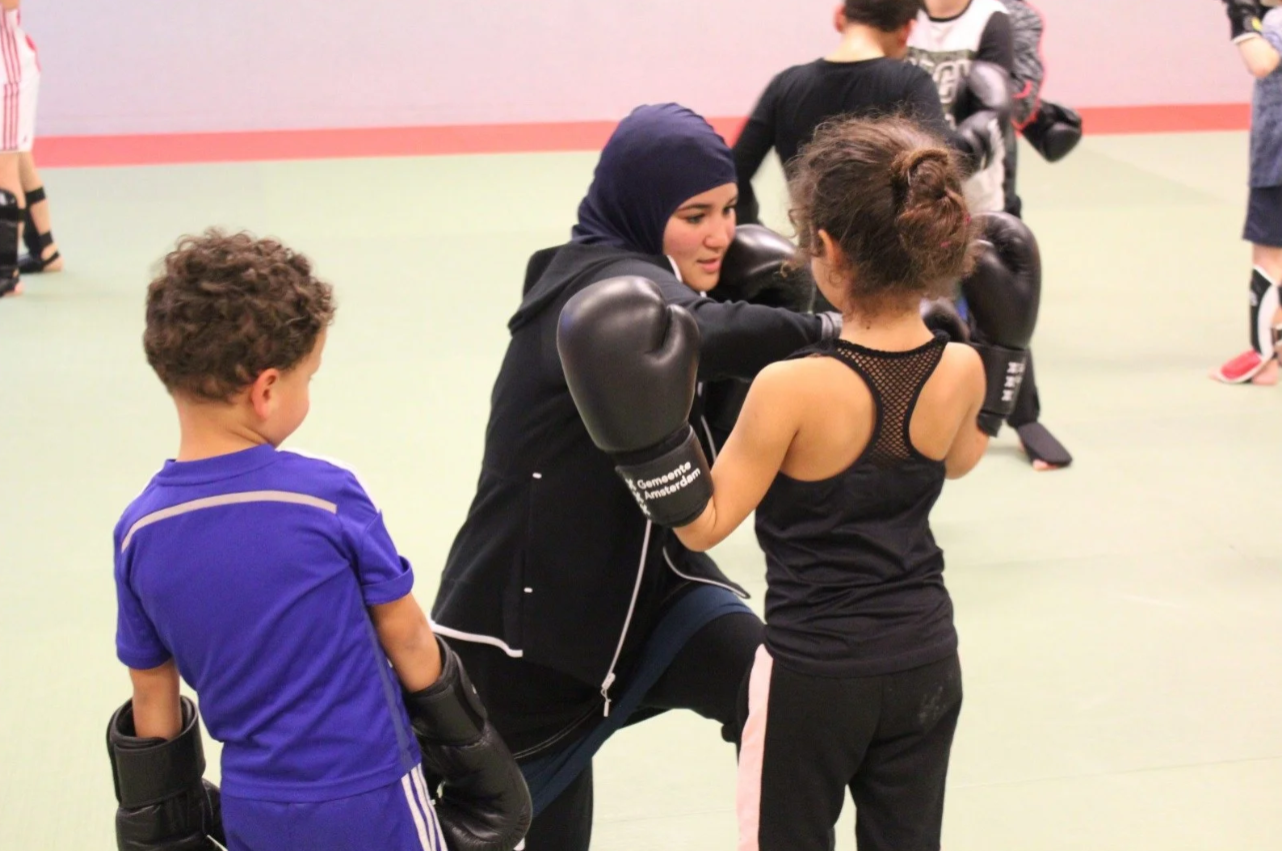
At 14, Houda Loukili became Dutch youth kickboxing champion, competing while wearing a headscarf. At the time, sports headscarves did not exist. She improvised, securing her scarf with wig tape and athletic tape to make it competition-ready. Her participation was not just athletic. It was symbolic.
-
In her environment, kickboxing was uncommon for girls. Competing visibly as a Muslim athlete required both courage and creativity. Houda was navigating multiple identities:
Young athlete
Muslim girl wearing a headscarf
Competing in a male-dominated sport
Later, a mother of three
Representation was limited. Few girls from similar backgrounds saw themselves reflected in sport. Later in life, postpartum physical recovery also presented a new challenge. After both pregnancies, she experienced severe pelvic and back pain requiring rehabilitation.
Winning the Dutch youth championship became a mileston, not only for Houda, but for girls watching her. “I had to prove myself. But I made it easier for the girls after me.” Her visibility mattered. She later became involved with the Krajicek Foundation, where she was recognised for her ability to engage girls from diverse neighbourhoods in sport.
As a sports coach, Houda focuses on:
Building confidence
Recognising individual strengths
Creating safe spaces
Offering tailored encouragement
“You give one a fist bump, the other a hug.” She understands that girls may feel safer in indoor space, yet under her leadership, they also show up on public playgrounds. Her presence changes what feels possible.
Through her coaching:
Girls become more confident
School-related issues become easier to discuss
Identity becomes something to embrace, not hide
Houda is open about her own struggles, including motherhood and recovery, her relatable across generations. “I always put myself out there. I think that works well, I inspire others at every stage of my life.” For some girls, simply seeing her train in a headscarf expands their imagination: “Oh, that’s another option.”
Houda’s story is about more than sport.
It reflects:
Visibility as empowerment
Faith and sport coexisting
Intergenerational opportunity
Women supporting women
She often credits her own role model, her mother, who had fewer opportunities growing up in Morocco. “I have opportunities. I’m going to grab them.”
GIVING UP IS WORSE THAN LOSING
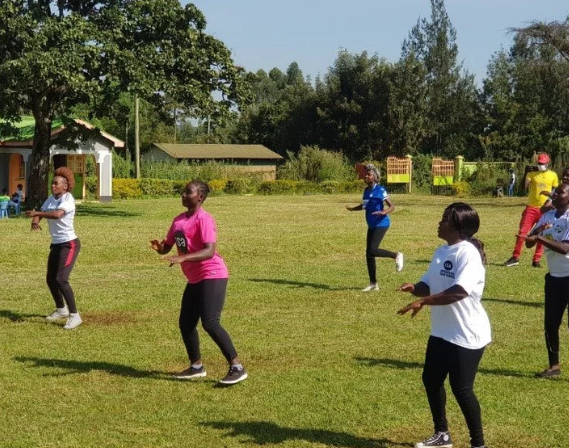
Carolyne Ndalilah, director of the high-profile Kenyan youth organisation TYSA, helps young people get to know themselves and the challenges facing their communities. 'What our society needs are young people who think beyond tomorrow; who see it as a challenge to try the impossible.'
-
At 15, Carolyne Ndalilah joined Transforming Young Stars of Africa (TYSA) in Kitale, north-western Kenya. TYSA’s mission is simple but powerful:
Create safe spaces for young people and involve them in decision-making, and real social change becomes possible.At the time, Carolyne was a teenage mother. Her pregnancy had disrupted her education, and her future felt uncertain.
Carolyne belonged to one of the vulnerable groups TYSA supports, teenage mothers and youth without parental support.
In her community:
Girls often leave school early
Early marriage is common
Women have limited voice in household decisions
She recalls believing that continuing her education was nearly impossible.
Through TYSA, Carolyne participated in:
Empowerment sessions
Leadership programmes
Holiday camps
Peer support groups
For the first time, she encountered other young people sharing similar struggles. “What I learned most of all,” she says, “was never to give up hope.” Crucially, TYSA reinforced that:
Having a child while in school is not a crime. A young woman still has a future.Carolyne’s growing confidence transformed how her family saw her potential. Her father, inspired by her development, sold a piece of land to finance her studies. She enrolled in social work at Eldoret College of Professional Studies, but funding fell short. To continue, she:
Worked in a salon braiding hair
Attended classes in the evenings
Later produced and sold liquid soap door-to-door
Through creativity and resilience, she financed her entire education and even supported her family.
After completing her studies, Carolyne:
Interned at a government scholarship organisation
Continued rising through TYSA’s leadership structure
Mentored other young people
In 2022, at age 25, she became Executive Director of TYSA, the same organisation that once supported her. She describes mentoring as: “Helping others realise who they are, what the challenges are in their community, and how they can tackle them.” Under her leadership, TYSA continues to:
Promote youth-led decision-making
Challenge gender norms
Increase girls’ participation in leadership
Engage families in dialogue about education and equality
Carolyne’s story represents more than individual success.
It demonstrates:
Intergenerational belief-building
Community norm shifts
Youth-led leadership pipelines
Sustainable organisational succession
TYSA’s model intentionally prepares young participants to become future leaders. Carolyne is proof of that model.
Looking Forward. Her contract concluded in December 2022, making space for another young leader to step forward, continuing TYSA’s philosophy of youth leadership.
Carolyne’s next ambition:
To pursue a PhD in social work.Her life motto:
“In life, you shouldn’t be afraid of losing, but afraid of giving up.”