
What is the SGG intervention?
The SGG intervention is a structured, sport-based model that equips diverse youth especially those from underserved communities with the skills, safe spaces, and influence to drive lasting social transformation. We use sport as an entry point, not an end goal. Sport creates environments where young people gather naturally and consistently. Within these spaces, SGG intentionally integrates leadership development, gender equity, and community engagement. Participation becomes a pathway to confidence, voice, and agency.
Our work focuses on young people who face systemic barriers to opportunity and representation including girls, youth in marginalised neighbourhoods, and communities affected by inequality or social fragmentation. These young people are often excluded from decision-making processes that shape their lives. SGG’s intervention is designed to change that dynamic. Rather than delivering short-term activities, we build long-term structures. Through partnerships with local organisations, we support the creation of inclusive sport environments where young people develop life skills, assume leadership roles, and engage constructively with their communities. Over time, participants move from involvement to ownership from taking part to shaping programmes and influencing norms.
The intervention is grounded in a simple principle: when young people are given safe spaces, responsibility, and meaningful opportunities to lead, they contribute to stronger, more resilient communities. SGG therefore combines sport programming, youth leadership pathways, and community-level engagement into one integrated model. The objective is not only increased participation in sport, but sustainable shifts in confidence, gender norms, representation, and local leadership
CORE COMPONENTS
SAFE SPACES
-
SGG creates sport environments where youth feel safe, welcome, and valued. These spaces are accessible to girls, underrepresented youth, and those from underserved communities. By partnering with local organisations and trusted community leaders, we ensure that participation is consistent, inclusive, and structured.
Within these spaces, young people can build confidence, connect with peers, and develop essential life skills. Safe Spaces support Confidence, Connection, and Competence from ISA’s 5Cs, laying the foundation for personal growth and community engagement.
YOUTH LEADERSHIP
-
Participants are encouraged to take ownership of activities, mentor peers, and lead initiatives in their communities. SGG provides structured pathways for youth to plan sessions, facilitate programs, and make decisions that affect their local sport environment.
This approach transforms participants from passive attendees into active change-makers. Youth Leadership develops Competence, Confidence, and Contribution, empowering young people to act as agents of positive social change.
GENDER INCLUSION
-
SGG intentionally designs programs to address barriers faced by girls and underrepresented groups. Coaches and facilitators create environments that are safe, respectful, and sensitive to cultural and gender differences.
By participating fully, girls gain confidence, express themselves, and take leadership roles within programs. Gender Inclusion supports Confidence, Connection, and Character, ensuring that every young person has equal opportunity to thrive and contribute.
COMMUNITY ENGAGEMENT
-
SGG connects sport activities with the broader community. Parents, local leaders, and organisations are engaged in planning and supporting programs to reinforce impact and ensure sustainability.
This pillar ensures that programs are contextually relevant, scalable, and embedded in the community. Community Engagement fosters Connection, Contribution, and Character, amplifying the social impact of SGG and helping youth translate their skills into meaningful change.
OUR THEORY OF CHANGE
The SGG Intervention is guided by a structured and evidence-informed Theory of Change. It explains how creating safe sport environments, strengthening girls’ skills and agency, and engaging communities together contribute to sustainable gender equality and youth leadership. The framework connects our activities directly to measurable outcomes and long-term impact. In many contexts, girls face limited opportunities to participate in sport, influence decisions, and access safe spaces for growth. Structural inequalities and restrictive norms often exclude them from mainstream community life. SGG addresses these barriers through intentional, gender-transformative design.
Our approach
SGG operates through three interconnected conditions for change:
Enabling environment: Girls are supported by coaches, community-based organisations, and peers who foster safe, inclusive, and motivating sport spaces.
Empowerment & agency: Through Positive Youth Development and meaningful participation, girls build skills related to the 6Cs ie; confidence, connection, competence, character, caring, and contribution and strengthen their voice.
Leadership & community change: Girls transition from participation to leadership, becoming role models and contributing to more inclusive, youth-friendly communities.
Long-term impact
SGG contributes to healthy, engaged girls and young women who design and create positive change for their own futures and for their communities. At community level, the intervention supports increased participation, representation, and decision-making of young women, aligned with broader gender equality goals.
Explore the full framework
The complete SGG Theory of Change outlines the detailed pathways, indicators, assumptions, and measurement tools guiding implementation and learning.
IMPLEMENTATION MODEL
She Got Game is implemented through our structured delivery model that ensures safety, quality, and consistency across all contexts. While adaptable to local realities, the intervention follows clear global standards coordinated by ISA.
SGG adoption follows a defined sequence:
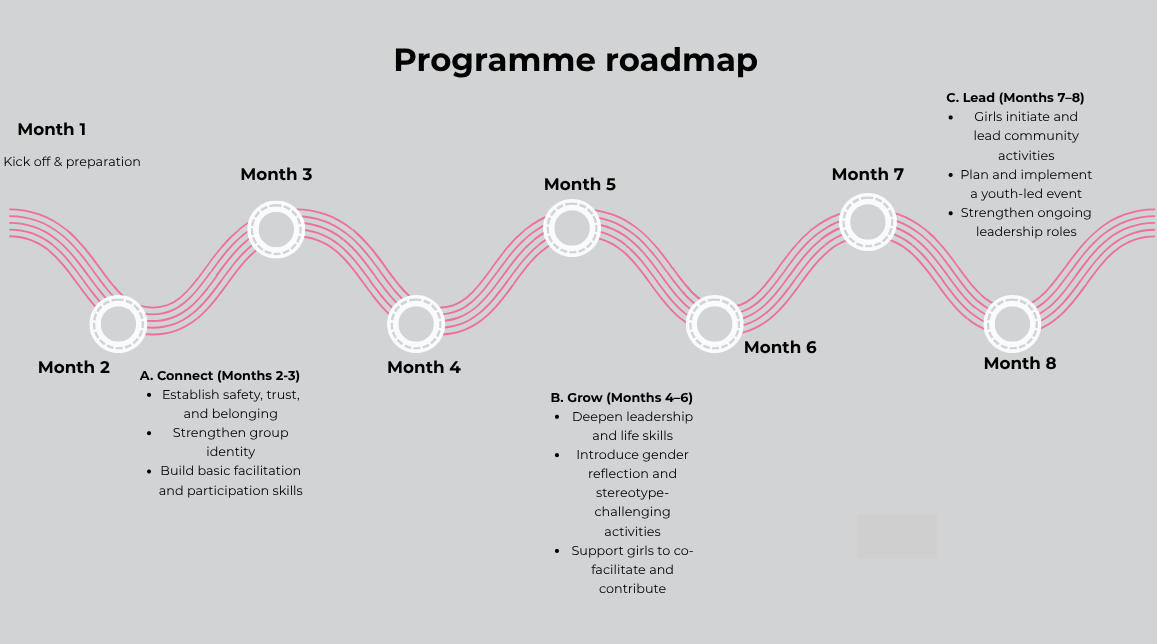
Prepare → Train → Deliver → Support → Elevate → Sustain
This phased approach ensures that implementation moves beyond participation toward leadership development and long-term sustainability. The intervention includes clearly defined roles, mentoring systems, monitoring requirements, and partner readiness standards to protect programme integrity.
Adoption & collaboration
SGG is expanded through formal partnerships with organisations that meet readiness and safeguarding standards. Detailed delivery guidance and adoption criteria are shared with organisations exploring structured collaboration with ISA.