‘START PLAYING SPORTS, BUT KEEP STUDYING’
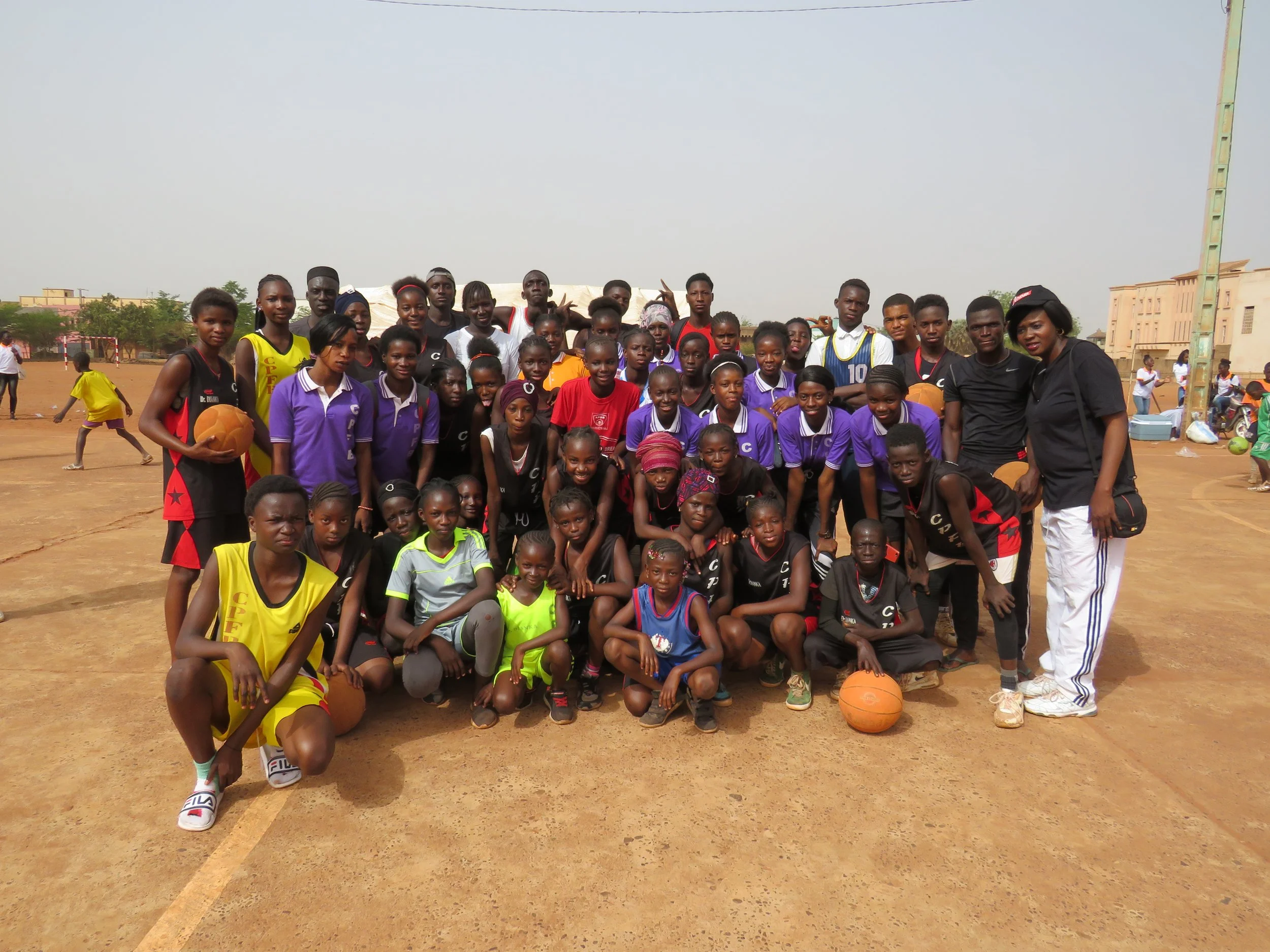
Every day from four to half past eight, you will find Konaté Mariam Sidibé on the sports field. And with the arrival of basketball, drugs, crime and emptiness slowly disappeared from the Faladié neighbourhood in Bamako. ‘You can be the best in the world,’ says the coach, ‘but dealing with children requires something else: patience, listening. That’s the only way you can help them.’
Konaté Mariam Sidibé (in Mali, you start introducing yourself with your surname) lives in Faladié-Séma, a neighbourhood where a reasonably well-off middle class has settled, with its own customs. ‘I was the first young woman in this neighbourhood to come up with the idea of playing basketball. You didn't see children playing outside here. You just didn't do that. And then suddenly a girl in sportswear shows up! The first thing people thought was: wow, she's crazy!’
But she's not that crazy. With her own career in sport behind her and a healthy dose of charisma, she has lifted an entire sports scene out of the dusty sand in just a few years. The results are impressive, thanks in part to the support of the Game Changers programme.
Since the training, things have changed
Konaté puts her heart and soul into training children from the neighbourhood. The initial scepticism of the somewhat snobbish parents disappeared when they noticed the impact the activities had on the children. Konaté explains this in terms of the changes in the city.
‘What we have seen happening in recent years,’ she says, ‘is an increase in crime. Here in the neighbourhood too. Young teenagers on drugs. They still go to school, but otherwise their lives consist of emptiness and playing on their mobile phones. Since I set up the training sessions, that has changed. Now the whole field is full of kids playing, and we want to keep them focused, because we don't want them to fall back into their bad habits...
'I'm at the sports field almost every day,' she continues, 'from four o'clock to half past eight. We can continue until late because there's a floodlight next to the field. I start with the youngest ones, letting them romp around and play with balls. At six o'clock, the older children arrive, and I work with them on technique, passing, game tactics, and so on. They are very motivated because they know that you can pursue a career in sport.'
Part of her own training at Game Changers consisted of learning how to motivate children, especially young children, to participate in your activity. The key, according to her, is to take them seriously. 'Our young people often have difficulty expressing themselves. Even we, as coaches, tended to give them assignments that they then obediently carried out. Now we are more attentive to their ideas. We are getting to know them better, which enables us to help them on their way more effectively.
Both on and off the pitch. Children often come from families where they are allowed to be seen, but preferably not heard. Konaté noticed this herself.
‘I supervised three of them, all of whom were terribly shy and very introverted. Using the knowledge I gained from my own training, I was able to help them come out of their shells. This applies to boys just as much as it does to girls, by the way.’
Keep studying
‘Have I ever had problems with boys in the past? No, never. Why not?’ She answers the question with a hearty laugh. ‘Because I was just as good as they were! And that helped me a lot when I finally started playing for the club. In my current job, I don't consider being a woman a handicap either. As long as you're brave enough, you'll succeed. I sometimes hear, through my husband, that there are comments. People in the neighbourhood say to him, “Are you letting her do all that?” And he says, 'Yes, of course. Because that's what she wants.'
Despite her visible satisfaction with her pupils' opportunities, Konaté continues to emphasise the importance of school. ‘We saw that with previous generations. They made a lot of money and then didn't save it. So when their careers were over, they had nothing – some had to ask their families for money. My message is always: keep studying.’
Nevertheless, she is visibly delighted with the few good results: ‘Did you know that three boys from this neighbourhood have already been picked up by clubs abroad? Two in the United States and one in Serbia. From Faladié! They are still in training, but they will soon be earning money...’
Help in the neighbourhood, help from the neighbourhood
Children's development through sport. Mariam also sees this in other areas, and it is not limited to keeping the neighbourhood clean, however important that may be. 'There is a place nearby where displaced persons have been housed. They fled the violence in the centre of our country. They live in a tent camp. We recently organised a visit from the neighbourhood. What did the children come up with? They collected everything they no longer used, especially clothes, and took it with them to give to the people there. Not a penny was added from outside.'
There is one thing that bothers her, and that is that too little attention is paid to the professional potential of sport. 'There is far too little development of sport. People don't really see the importance of it, so there is no money for it, not even from the government. Clubs and sports centres have to fend for themselves. Some ask for a small amount, say one and a half euros for a training session.
'That's possible in neighbourhoods where there is some money, but there are also neighbourhoods where people are really poor. You can't possibly ask disadvantaged families to contribute, especially if they send two or three children to the sports field; they simply can't afford it. I see a lot of talent being lost for that reason.'
The same applies to Konaté herself. ‘I do all this for free – and that really has to change eventually. I love this work, but it needs to be approached professionally, which also means paying people for their work. I want to move forward myself: I want to become a major female international trainer, on an equal footing with the men.’
Does she have any golden tips for those who want to work with children? Absolutely: 'You have to love them. Get to know them really well, find out what they want. If you arrive with an attitude of “look what I've already achieved...” – no, that doesn't work. You can be the best in the world, but working with children requires something else: patience, listening. That's the only way you can help them progress. Because believe me, they all want to succeed."