‘I make mistakes, so you can make them too.’
Angelique Rozeboom (32) spent years working in disadvantaged neighbourhoods across the country to get girls involved in sports. Now, as regional manager at the Krajicek Foundation, she hopes to ensure that Krajicek Playgrounds are no longer the exclusive domain of boys. 'On too many pitches, it's still the law of the jungle. This deprives girls of the opportunity to enjoy playing sport.'
Until she was 18, Angelique could be found almost every day on a small field in the Deppenbroek neighbourhood of Enschede. Mainly to play football. And she was good at it. For years, she was part of the KNVB youth teams and played at the highest national amateur level at FC Berghuizen in Oldenzaal. She dreamed of a career as a professional. “But that was even more difficult back then than it is now,” says Rozeboom, who stopped playing football at the age of 26 and became a community sports coach through the CIOS Neighbourhood Sport and Education programme.
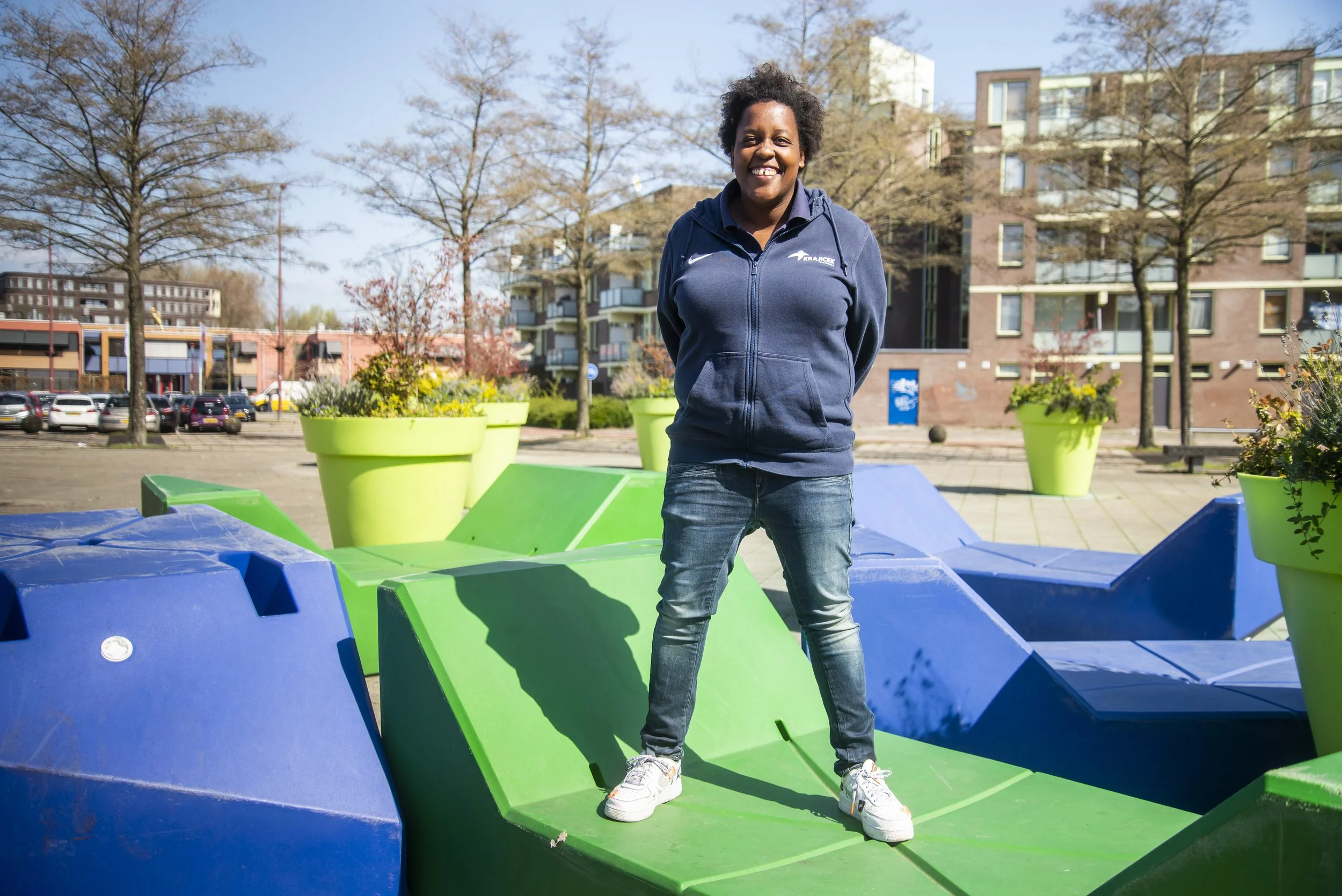
Her talent for football was also noticed on the pitch opposite her house. That made it easy for her to be accepted by the boys in the neighbourhood, but for many other girls, the opposite was true. ‘On those playing fields, it's actually the law of the jungle. And there are so many children, especially girls, who can't cope with that,’ explains Angelique. ‘This deprives them of the opportunity to enjoy sport and exercise. I was good at football, so I quickly became part of the group. But other girls weren't good enough to join in. Then it's no longer fun to go outside.’
Girls only
Girls. Angelique cannot emphasise enough how important it is to get this particular group involved in sport. Especially in disadvantaged neighbourhoods such as Deppenbroek or Overvecht, Kanaleneiland and Hoograven, where she later worked. We saw that girls' participation in sports in those neighbourhoods lagged far behind that of boys. This was already the case among immigrant children, and the difference was even greater when comparing native and immigrant children. Then I thought: we have to do something about this. The only question was: how are you going to shape it?
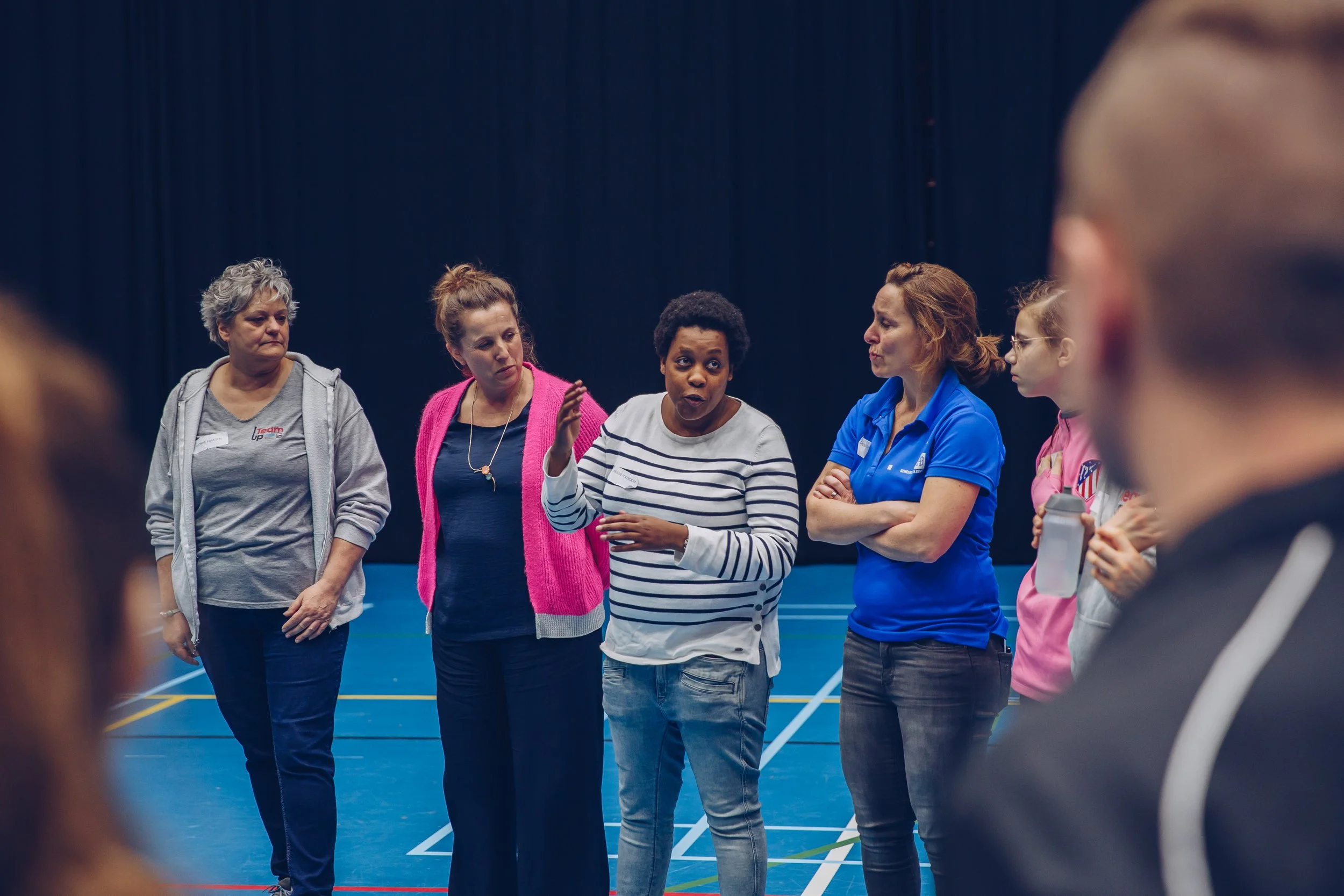
Angelique decided to set up shop in a gym next to a school in Overvecht. “At school, I promoted Meidensport: girls only.” She pauses briefly. 'I couldn't handle the influx, man. It was crazy how many girls showed up. The first time, there were 35 girls, and that was full. And many more wanted to come.'
Not with the boys
It turned out that girls mainly want to play sports with each other and not with boys. They also often have no need for competition. Above all, it has to be fun and enjoyable. 'Give boys a ball and they'll play football for an hour. Girls want to talk first, share their feelings. So first we had a nice chat, then we talked and then we did some sport. That's when they open up. I think they often missed having those chats at home. Eventually, those girls also start to see you as a kind of friend. I still bump into those girls sometimes. It's great to see how they've grown.'
Requests from other neighbourhoods in Utrecht followed. Pilot projects were also launched in Kanaleneiland and Hoograven. 'And there too, it was a huge success. Could we have done it on a larger scale? It was only a pilot project, so I couldn't hire all kinds of extra people, haha.'
Don’t listen
So you see, just by trying something, it is possible to set up a very successful activity. Although that may sound relatively easy, in practice it often takes a lot of hard work. 'This target group is not always understood by policymakers,' explains Rozeboom. 'There is certainly a need for exercise in disadvantaged neighbourhoods, but you have to work in a demand-driven way. That's what often goes wrong. Something is devised, but you don't listen to what the neighbourhood has to say. Whereas it's so important to ask: what do you enjoy doing?
‘I once heard someone from the local council say: you have to get at least thirty children doing sport every week,’ she continues. ‘I don't find that interesting at all. I'd rather have ten children on the playground who have never been involved in sport than thirty children who are all already members of a club. It's precisely those children who aren't normally there. That's the target group.’